Nov 10, 2025
What should I have on my roofing business website? A complete breakdown of content, features, and integrations roofers actually use.
Diana Caro
A Practical Guide for Roofing Companies
When homeowners visit a roofing company’s website, they’re usually there for one reason: they need help, and they need to know if they can trust you.
Your website isn’t just a brochure. It’s often the deciding factor between a phone call and a closed tab.
So what should you actually have on your roofing business website to turn visitors into real leads?
Clear, Immediate Messaging Above the Fold
Within seconds, visitors should know:
What services you offer
Where you work
How to contact you
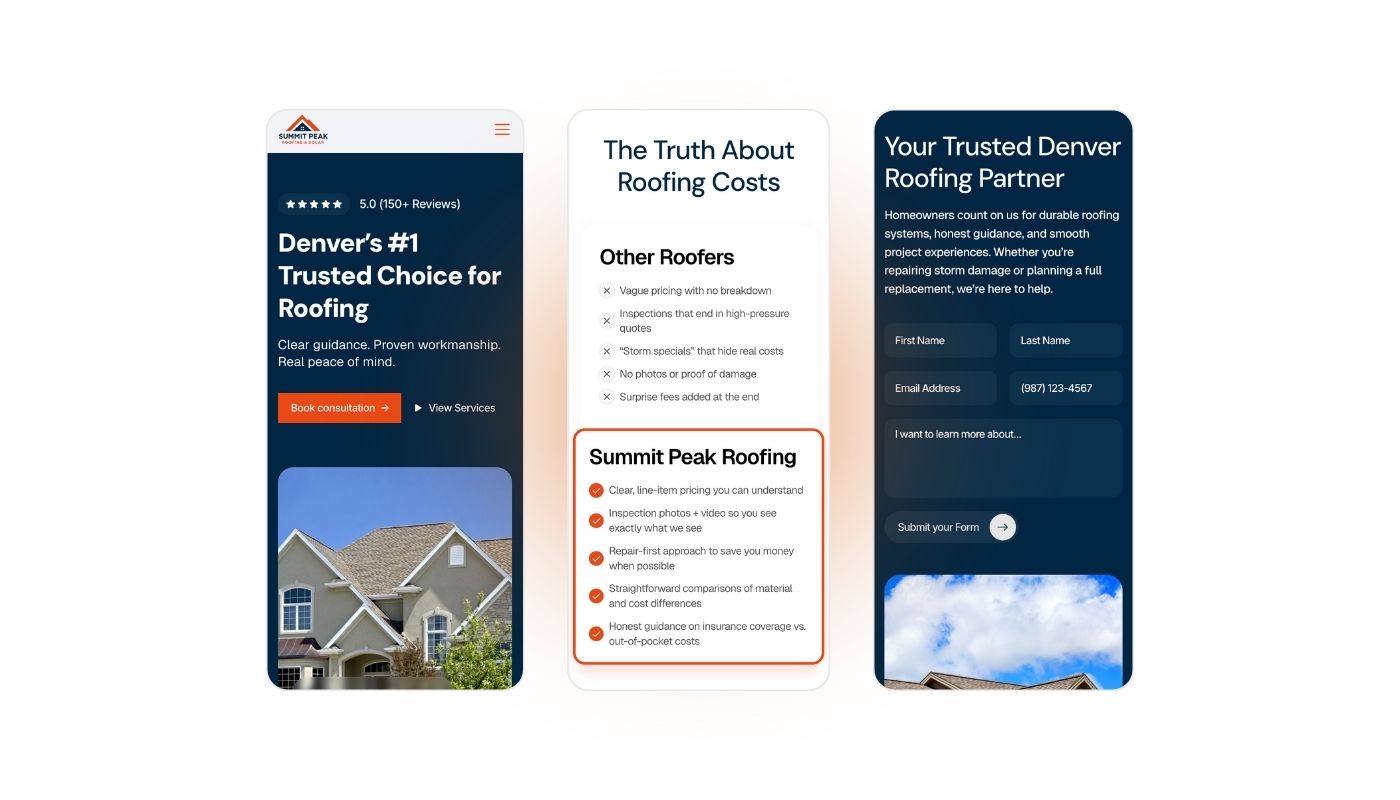
A strong headline paired with a clear call to action sets the tone. Avoid clever language. Roofing customers value clarity over creativity.
Common integrations:
Service-specific forms routed to your CRM
Page-level tracking through Google Analytics
This allows you to see which services are driving the most inquiries.
A Dedicated Roofing Services Page
Don’t place everything together.
Your website should clearly explain:
Roof replacements
Roof repairs
Storm damage and insurance claims
Inspections and maintenance
Each service should have its own section or page that explains the process, what homeowners can expect, and when to call a professional.
This builds trust and helps with search visibility.
Proof You’re Legitimate
Roofing is a trust-heavy industry. Your website needs to show credibility immediately.
This includes:
Licensing and insurance information
Certifications or manufacturer partnerships
Years in business
Service area details
Common integrations:
Badge embeds from manufacturers like GAF, Owens Corning, or CertainTeed
Trust badges and review widgets
These elements quietly reinforce credibility.
Real Photos of Your Work
Stock photos hurt credibility in roofing.
Homeowners want to see:
Actual projects you’ve completed
Before-and-after photos
Team members on job sites
Common integrations:
CompanyCam for project photos
Tagged project galleries by service or neighborhood
This turns your past work into a powerful sales tool.
Customer Reviews and Testimonials
Social proof matters, especially for roofing businesses.
Include:
Written testimonials
Google review highlights
Star ratings
Case studies when possible
Common integrations:
Google Reviews widgets
Testimonial sliders pulled directly from review platforms
Displaying fresh reviews keeps your site feeling current and trustworthy.
Insurance and Storm Damage Information
Many roofing leads come from storm damage.
Your website should explain:
How the insurance process works
What homeowners should expect
How you help with claims
Common integrations:
Downloadable insurance checklists
FAQ accordions
Educational blog posts tied to storm events
Some roofers also integrate lead forms specifically for storm damage inquiries.
Instant Estimates and Pricing Transparency
What to include:
Estimate request options
General pricing guidance
Clear next steps
Homeowners increasingly expect some level of pricing insight.
Common integrations:
These tools help qualify leads and speed up the sales process.
Mobile-Friendly Design
Many homeowners will visit your site from their phone, often while dealing with an urgent issue.
Your site must:
Load quickly
Display clearly on mobile
Offer click-to-call functionality
If your mobile experience is poor, you’ll lose leads.
About Page That Feels Human
Homeowners want to know who they’re inviting onto their property.
Your About page should share:
Your story
Your values
Your commitment to quality and safety
This is where trust is built emotionally.
Clear Contact Information
Make it easy to reach you.
Include:
Phone number
Contact form
Service area
Business hours
And repeat this information consistently across your site.
Common integrations:
CRM-connected forms (JobNimbus, AccuLynx, HubSpot)
Automated follow-up emails or texts
Call tracking tools like CallRail
This ensures no lead falls through the cracks.
Helpful Educational Content
Roofing customers often have questions.
Consider including:
FAQs
Maintenance tips
Cost considerations
Signs of roof damage
Educational content builds authority and helps homeowners feel confident reaching out.
Final Thoughts
A roofing website works best when content and technology support each other.
Clear messaging builds trust.
Real photos prove experience.
Smart integrations streamline estimates, follow-up, and sales.
When all of these pieces work together, your website stops being just an online presence and starts becoming one of your most valuable business tools.